
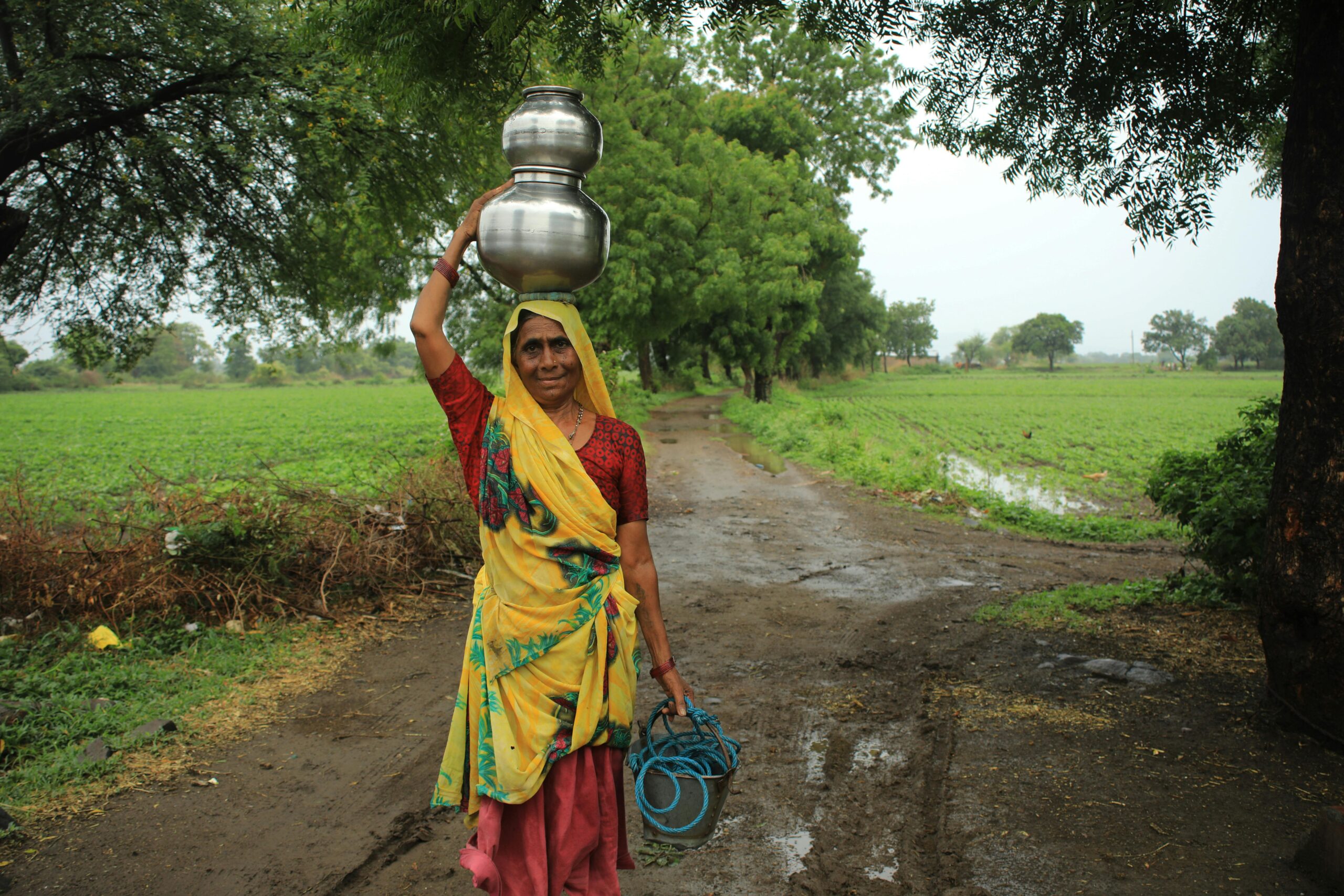
India’s local governance framework is progressive. With mandated reservations for women in Panchayati Raj Institutions, leadership at the village level is meant to be more representative, inclusive, and responsive to diverse community needs. Yet, what governance promises in structure does not always translate into governance experienced on the ground.
This became evident during a socio-economic needs assessment conducted across five villages in one of Pune’s district, as part of a road development study for a leading banking institution. The region itself reflected visible prosperity with sugarcane-dominated agriculture, proximity to sugar factories, and signs of economic mobility, from Royal Enfield and SUVs parked outside homes to well-maintained village infrastructure.
When we entered the gram panchayat offices, the reception was warm and formal. Elected members, dressed in crisp white shirts, trousers, and traditional attire associated with political authority, welcomed us, offered tea, and readily shared their views on village development priorities. During these conversations, a detail stood out: the name board listed in Panchayat both the Sarpanch and Upa-Sarpanch as women.
However, the room told a different story. The individuals present actively discuss village affairs and respond to questions referred to one another using the titles of Sarpanch and Upa-Sarpanch, despite neither holding those positions officially. When asked about this, it was explained matter-of-factly that the elected representatives were their wives.
In line with our research protocol, we requested an opportunity to speak directly with the elected women leaders to understand their perspectives. The atmosphere shifted instantly. Conversations paused. Glances hardened. The response was firm: the women “did not know much,” and all required information could be provided by those present. When the request was reiterated specifically to hear a woman leader’s perspective the refusal became explicit. The message was clear: access was neither necessary nor permitted.
This pattern repeated itself across neighbouring villages. Women elected were described as signatories, while decision-making authority rested elsewhere. The arrangement was presented as efficient, even practical but its implications surfaced gradually through household visits and community-level focus group discussions.
Across villages, development priorities followed a familiar pattern. Gram Sabha discussions centred on visible infrastructure, renovation of religious structures, paving blocks around prominent areas, open gyms for young men, and improvements concentrated near the panchayat office or influential households. Meanwhile, issues that directly affected women’s daily lives received far less attention. Access to safe drinking water, for instance, remained a persistent concern, with many households especially migrant and underserved families dependent on elite family borewells or farm borewells of high mineral content. While water access could be privately managed by economically stronger households, it was not recognised as a collective priority. Similarly, the lack of functional sanitation facilities and adequate street lighting in interior lanes continued to affect women’s safety and dignity, yet these concerns rarely found space in formal discussions despite women elected as a panchayat head.
What became evident was not the absence of development, but the absence of certain voices in shaping it. Representation existed, but access did not. Authority was formally assigned, yet informally redirected. Governance processes moved forward, but along pathways shaped by identity, power, and social norms rather than by the full spectrum of community needs.
Another similar experience highlighted just how relative the identity can be. During a baseline study in the westernmost parts of Gujarat, we visited a Sarpanch’s house. His wife played the gracious host, serving water and tea, only for us to discover that she was, in fact, the Sarpanch. It became clear she was completely removed from local governance. Furthermore, the family belonged to an affluent minority that visited their native village only sporadically, leaving even the husband somewhat out of touch with village realities.
When the research group moved out to conduct other interactions, we crossed paths again with the real Sarpanch in an all women gathering. When we sat down to conduct a group discussion with them, the social dynamic altered. In this setting, the other women proudly acknowledged her as the Sarpanch. In this space, the lady could not only attach the Sarpanch title to her identity but other women regarded her as one too. How her power and responsibility translated into governance was bleak but she could at least own the title in that small group.
These observations raise important questions for local governance. When leadership is symbolic rather than substantive, whose priorities shape decision-making? When access is mediated by gender and identity, how do certain issues remain persistently invisible? And when participation is constrained, what does accountability truly look like?
Governance, after all, is not only about who holds office, but about who is heard, who decides, and whose everyday realities inform those decisions. The gap between representation and participation may be subtle but its impact on outcomes is anything but.