Welcome to this edition of The Social Audit.
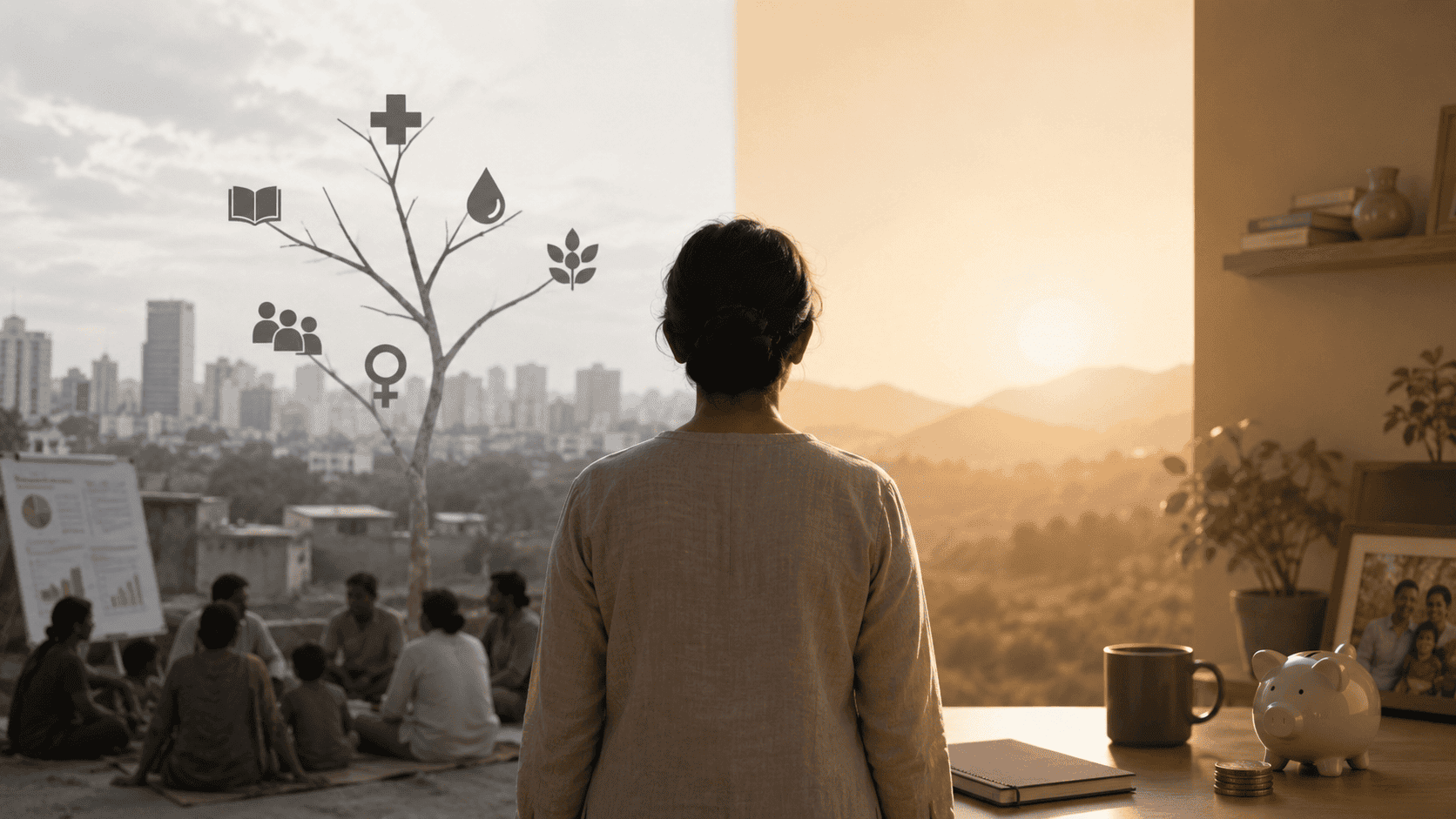
In the social development world, we talk a lot about “impact,” “sustainability,” and “systems change.” But we rarely talk about what happens when the workday ends and we have to walk back into the very systems we spent all morning questioning. Because let’s be honest: for us, this isn’t just a job. It’s a lifestyle. You don’t really leave the “office” at your desk; you take it home with you.
There’s a strange, quiet friction that lives in that transition. We spend our hours fighting the “good fight,” only to go home and, by necessity, invest back into the organizations and structures we’re trying to improve. It can feel a bit like scolding a child for an hour and then handing them a lollipop the moment the session is over. It doesn’t quite make sense on paper, yet it’s the rhythm of our daily lives.
The Human Side of the Mission
The truth is, we aren’t just “development actors”, we’re people. We have families to protect, kids to put through school, and the very human need to save for a rainy day. We have our own hopes and dreams for the future, but in this sector, those dreams often come wrapped in a layer of guilt.
But we don’t need another reminder of how we’re “failing” the cause. What we actually need is a better way to be a person working in development. This cognitive dissonance, the constant pull between our values and our reality, needs to be easier to navigate.
Life as a Moral Query
As the world develops, every tiny decision starts to feel like a heavy moral choice. It’s the “Gemini Dilemma”: using a tool that might have a massive footprint but gives you the peace of mind to get a high-stakes deliverable to a client on time. It’s the constant internal debate over going vegan, or where to put your modest savings, (tech or no tech?).
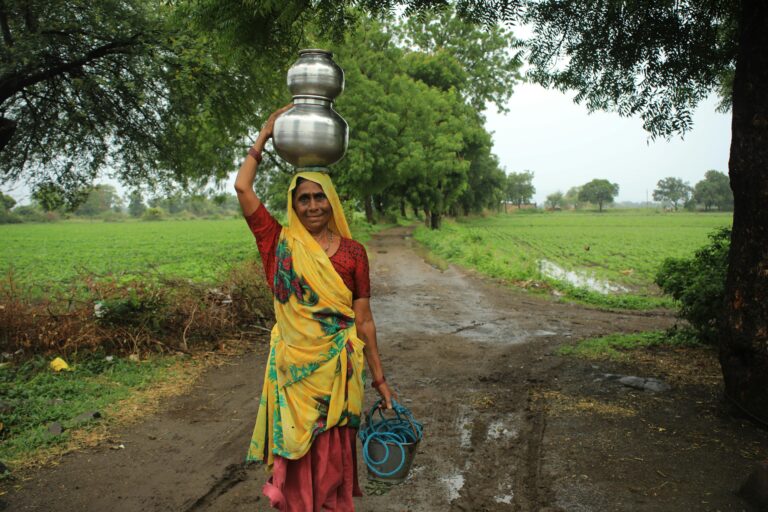
Living and working in India feels like experiencing this tension in “Hard Mode.” You can’t step outside without the world asking you a question. Do I help this person? Do I help this dog? Ideally, the answer should always be yes. But practically, we don’t know how to help everyone, and eventually, that boundless empathy becomes fatigue.
Untangling the Knot
We’re at a point where the personal and the professional have blurred into one long, complex narrative. We’re not looking for a “correct” answer here, because there might not be one. Instead, we’re looking for the honest ones.
How do you untangle this tension? How do you reconcile the need for a stable personal future with the work of changing the world? Most importantly, how can we ask for better structures within our own sector? What are the changes that ease this internal conflict rather than adding to it?
Let’s talk about how we make the social development world a place where the people doing the work can actually thrive, too.