Over the past few months, conversations around India’s youth unemployment have found their way into everyday discourse .Beneath the memes, the moment pointed to something worth pausing on: a large section of India’s young population feels there isn’t a clear place for them in the system. It raises a natural question for those of us in the CSR space – what has the sector’s own response to “youth development” actually focused on, and what might it be leaving out?
The numbers suggest youth are very much on the CSR radar. India’s overall CSR spend touched a record ₹40,794 crore in FY 2024-25, up from ₹34,908.75 crore the previous year, with education continuing to receive the largest share – about a third of total CSR spend. Vocational skills and livelihood enhancement have also grown steadily, both rising 137% cumulatively between FY 2019-20 and FY 2023-24, crossing ₹5,500 crore and ₹6,900 crore respectively. Sports, by comparison, remains the smallest of these categories.
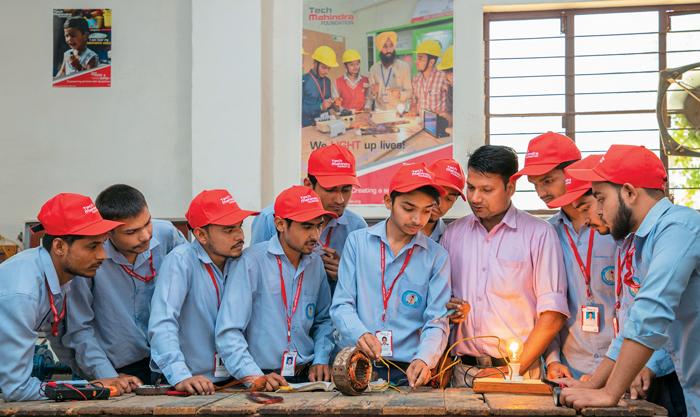
The encouraging read is that youth-focused CSR is expanding. The harder question is what is actually being measured within it. Most skilling reports centre on numbers that are easy to count – youth trained, certified and if possible then placed. These are meaningful milestones, and government evaluations (PMKVY 4.0, for instance, found employment and self-employment among trained youth rising from 26.6% to 45.4% post-training) show that structured skilling can work. But the process before training – understanding what a young person actually wants, and what they may already be good at – often receives far less attention than the certificate itself.
This gap becomes visible in a few recurring patterns:
- The same locally available trades – tailoring, beautician courses, ITIs, basic retail and electrician – tend to get repeated across projects, sometimes creating more competition among trained beneficiaries than actual income opportunity.
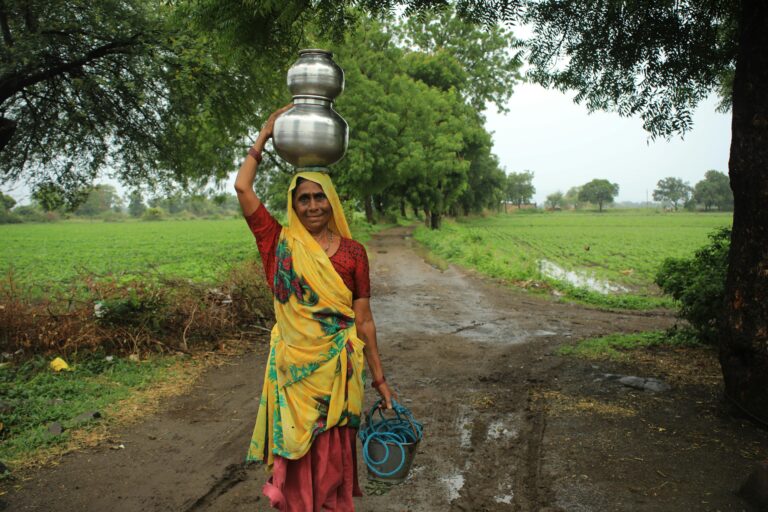
- Aptitude, especially physical aptitude, is rarely identified as an asset. Children in rural and tribal regions often grow up walking long distances, working outdoors, or helping with household and farm labour – building stamina and resilience that field assessments encounter often, but rarely record as potential. Mirabai Chanu has spoken about her strength first showing itself while carrying firewood as a child in Manipur; Lalita Babar’s early years in drought-affected Satara involved running barefoot to school and back. Neither began with a training certificate – both began with someone recognising an ability already there.
- Sports, correspondingly, remains the hardest area to fund and measure – progress looks like one athlete moving from a village competition to a district or state one, not a completion number – which may be exactly why it attracts the least CSR investment of the three.
None of this suggests stepping away from vocational training – it continues to open real doors. It may simply be worth asking whether CSR’s youth agenda could sit a little more deliberately at the intersection of three questions: what a young person wants, what they are naturally capable of, and what pathway around them can actually turn that into income or opportunity. The scale of funding is no longer the constraint. Perhaps the direction it takes is the next thing worth examining.
- Building in a proper aptitude and interest assessment before a training pathway is decided, rather than defaulting to whichever course is locally available or easiest to deliver at scale.
- Extending support beyond the training period itself – mentorship, industry exposure, and linkages that help a certificate actually convert into work.
- Anchoring entrepreneurship-linked interventions (a sewing machine, a small shop, a cart) to an actual, mapped local market, rather than treating the asset itself as the outcome.
- Treating sports talent identification in rural and tribal geographies as a legitimate CSR investment area in its own right, with the patience that longer, less linear outcomes require.
- Tracking income and employment a year or two after a programme ends, not just at the point of certification.
None of these require new categories of CSR spending, what they require is a shift in what gets asked before a project is designed, and what gets measured once it concludes.
India’s demographic dividend is often spoken of as a strength waiting to be unlocked. The scale of CSR funding directed towards youth is no longer the constraint – it has grown steadily and shows no sign of slowing. The direction it takes, and how closely it listens to what a young person already has to offer before deciding what to give them, may be the more important question for the sector to sit with next.