As evaluators, we come across and leverage many global frameworks, metrics, benchmarks, indices and more. While these are created in a way to have broad application potential, they don’t always translate 100%.
When a global model is applied to a country or a community without adapting it to local realities, it risks measuring the wrong things, missing the right people, or misdiagnosing the problem entirely. India is a useful case for understanding why.
Gender is one of the clearest places where this gap shows up. Global gender frameworks are useful anchors. But in India, the way gender shapes access, voice and outcomes runs through caste, religion, class, region and household structure. An evaluation that counts women as a single category will often miss who is being left out.
The limits of one-size-fits-all frameworks
Most global development frameworks are built around categories that make sense in the contexts where they originated – race, ethnicity, income bracket, migration status. These categories are not neutral or even exhaustive; they emerge from specific histories. Transplanting them wholesale into a different society can obscure the very inequalities they are meant to reveal.
India’s own experience with the SDGs illustrates this. Rather than adopting the goals as handed down, India built a National Indicator Framework that reworked global targets into locally meaningful ones, and pushed “localisation” down to the state and district level through bodies like NITI Aayog. This localisation effort has been described as more than adaptation of global goals to local contexts – it centers on ownership, political will, and empowering communities to build local solutions to global challenges. India’s model is built on institutional ownership, competitive federalism among states, capacity-building and a whole-of-society approach, rather than treating sustainable development as a parallel, standalone agenda. The lesson generalises: a framework only works when the implementing country treats it as a starting point for local reinterpretation, not a finished checklist.
Why is context necessary for the local social structures?
In the Indian context particularly, nothing makes the case for the need for contextualisation clearer than the Indian social stratification. Global development discourse, especially work shaped by American and European scholarship, is heavily organised around race. India’s foundational axis of exclusion is different: caste.
Caste is not simply India’s version of race. It is a distinct system that is hereditary, endogamous, tied to ritual status and occupation and has its own history, vocabulary, and constitutional response (reservations, scheduled castes and tribes, anti-untouchability law). Sociologists have long debated whether caste is being replaced by class or continues to shape class structures in subtle and overt ways. Scholars such as Dr B. R. Ambedkar, M. N. Srinivas and Andre Beteille have shown that caste and class interact rather than operate as isolated systems. A framework imported as is from race-based societies, without this grounding, will misread and misrepresent Indian inequality and treat caste as a marginal component of the social systems rather than structural.
Where gender meets caste, class and the household
Gender in India does not operate on its own. In Castes in India (1916), Ambedkar argued that caste is sustained through endogamy, and that control over women’s marriage and mobility is central to how caste reproduces itself. Gender and caste are, in that sense, part of the same structure.
This has practical consequences for evaluation. A Dalit woman agricultural labourer, a Muslim woman home-based worker and an upper-caste woman in salaried work may all be counted as “women beneficiaries”. The barriers they face are very different. Norms around mobility, seclusion, land and asset ownership, unpaid care work and access to a household phone vary by region and community. So does what a woman can decide on her own. Frameworks that treat “women” as one group, or use the household as the unit of analysis, tend to average these differences away.
What makes India resist a single template?
Beyond caste, India’s sheer internal diversity is itself an argument against blind template-application. A single national policy on language, employment, or social protection runs into a country with dozens of major languages, sharply different state-level development trajectories and social hierarchies that vary by region and community. Assessments of India’s urban SDG performance show states like Goa, Delhi, Kerala, Punjab and Sikkim performing far better than states like Bihar, Uttar Pradesh, Chhattisgarh, Madhya Pradesh and West Bengal – a spread wide enough that a single indicator threshold, calibrated for the “average” country, would misrepresent nearly every state it touched. Contextualisation, then, is not a courtesy; it is what makes measurement honest.
What to actually examine before replicating?
A programme that worked in one district, one state, or one country carries a temptation: replicate it as-is. The logic, the toolkit, the theory of change already exist, why redesign what’s proven? But “proven” is context-bound. A livelihoods programme built for the European context will not automatically work in India. Even within India, a matrilineal community in Meghalaya will not yield the same results in rural Haryana. Contextualisation is the discipline of asking, what needs to be adjusted or added as we borrow this model. A few guiding questions are –
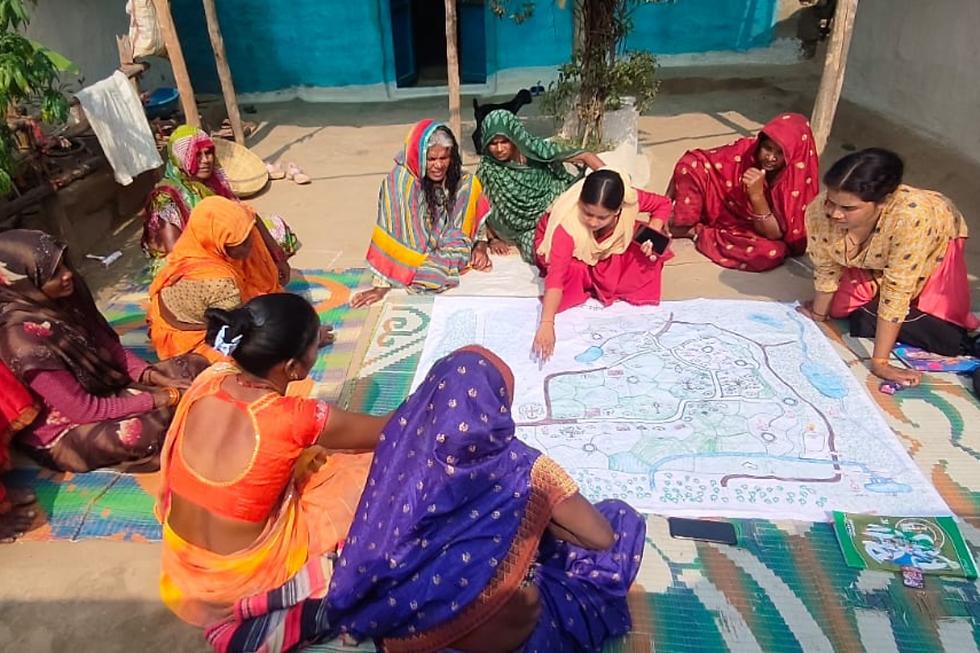
1. Who holds power locally, and how. Global programme templates often assume a generic “community” or “beneficiary.” In India, caste, gender, religion, land ownership, and local political structures (panchayat composition, dominant-caste gatekeeping) determine who actually accesses a programme’s benefits. A skilling programme that doesn’t map local power structures first risks being captured by the already-advantaged.
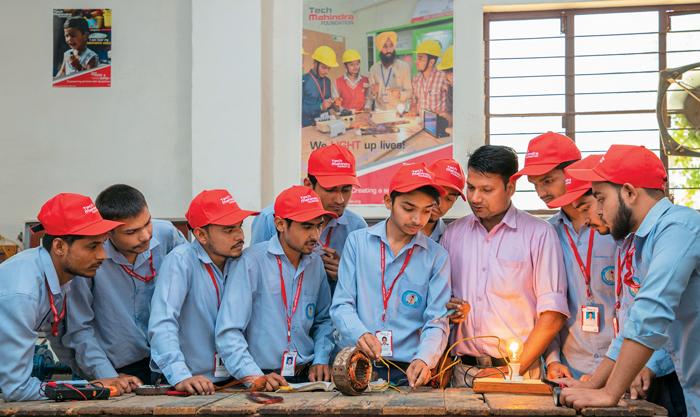
2. Language and literacy, not just translation. Translating programme material into Hindi is not contextualisation if the target geography speaks Bhojpuri, Santhali, or Tulu as a first language, or if literacy levels make text-based material unusable regardless of language.
3. Infrastructure and delivery constraints. Electricity, connectivity, transport, and seasonal migration patterns determine whether a digital or centre-based delivery model is even viable. A skill development project can struggle simply because trainees cannot travel daily, or a renewable energy installation can fail because local maintenance skills are missing.
4. Existing government and NGO ecosystem. India has already built its own institutional architecture for adapting global goals like the National Indicator Framework that reworks international targets into locally meaningful, trackable ones. A CSR programme that ignores this and runs parallel to district or state government schemes duplicates effort and confuses beneficiaries who are often already enrolled elsewhere.
5. Local implementation capacity. A mismatch between a company’s CSR goals and its implementation partner’s on-ground expertise routinely results in underutilised funds, delayed timelines, and minimal change, and problems tend to emerge in unexpected ways during execution rather than being visible on paper. Vetting a partner’s grounded experience in the specific geography — not just their sector expertise — is a contextualisation step, not a procurement afterthought.
6. What’s core to the model vs. what’s replaceable. Evaluating whether a programme is being implemented as its designers intended requires distinguishing the parts that drive the outcome from the parts that are merely how it was delivered in the original setting. A nutrition programme’s core might be the frequency and content of counselling; the delivery channel (mobile app vs. community health worker) is negotiable and should flex to local reality.
7. Who in the household is actually being reached. Programs and surveys often treat the household as a single unit. In practice, who owns the land, who holds the phone, who controls income and who can travel alone differ sharply between men and women, and between women of different castes, ages and marital status. Speaking to the right respondent, with an enumerator she is comfortable with, at a time that fits around her care work, is itself a contextualisation step.
How our Gender CoE brings context into evaluation
NuSocia’s Gender Centre of Excellence starts from a simple position: gender is a structural, organisation-wide practice, not a standalone women’s programme. In evaluations, assessments and research, that translates into a few consistent habits.
- Gender analysis before design. Before tools are finalised, we map gender norms, power structures and intersecting identities in the specific geography, including caste, religion, tribe, age, disability, migration and informal work. National averages are a starting point, not the answer.
- Adapting global frameworks, not dropping them. We draw on international references such as the OECD DAC Gender Equality Policy Marker and feminist monitoring and evaluation approaches, and test each against Indian evidence and homegrown frameworks before applying it.
- Gender-responsive tools and field teams. Survey and qualitative tools are designed to reach women directly, with separate group discussions where needed, women enumerators, local languages and timings that fit around care work. Indicators go beyond participation counts to decision-making, control over resources and mobility.
- Disaggregation that goes further than sex. Data is disaggregated by sex and, where it is ethical and safe to do so, by caste, age and other social markers. This makes the differences within the category “women” visible.
- Gender in the Theory of Change. We build gender into a programme’s Theory of Change and results framework from the start, so it is measured as an outcome rather than added at the reporting stage.
- Inside-out. We apply the same lens to the organisations we work with, looking at how gender shows up in their own teams, budgets and decisions, not only among beneficiaries.
Contextualisation, done properly, will need the investment of time and effort that direct replication may not need. But a model that ignores local context may create quite the room for overlooked stakeholders, unidentified beneficiaries, bottlenecks and so on. This can result in low uptake or disengagement that will most likely show after the CSR budget is already spent.
Resources
- Sociology.Institute, Intersectionality in India: Analyzing Caste, Class, and Gender Dynamics — https://sociology.institute/sociology-of-gender/intersectionality-caste-class-gender-india/
- When social identities intersect: understanding inequities in growth outcomes by religion-caste and religion-tribe, National Family Health Survey analysis — https://www.ncbi.nlm.nih.gov/pmc/articles/PMC10268355/
- Intersection of Caste and Class in Indian Society, Hub Sociology — https://hubsociology.com/intersection-of-caste-and-class-in-indian-society/
- Priya Narayan, The intersecting norms of gender and caste in South Asia: An annotated bibliography, World Bank / Align Platform — https://www.alignplatform.org/sites/default/files/2021-03/intersecting_norms_-_south_asia.pdf
- United Nations in India, From Commitment to Achievement: India’s Experience in Localizing the SDGs — https://india.un.org/en/163031-commitment-achievement-india%E2%80%99s-experience-localizing-sdgs
- UNDP, The Indian Model of SDG Localisation — https://www.undp.org/india/publications/institutionalising-sdg-localization-multi-level-governance-settings-lessons-india
- Indian Institute for Human Settlements (IIHS), Localising SDGs for India — https://iihs.co.in/knowledge-gateway/wp-content/uploads/2019/01/Localising_SDGs_for_India.pdf
- United Nations in India, From Commitment to Achievement: India’s Experience in Localizing the SDGs — https://india.un.org/en/163031-commitment-achievement-india%E2%80%99s-experience-localizing-sdgs
- iDreamEducation, CSR Implementation Partner: A Guide to Choosing the Right Fit — https://www.idreameducation.org/blog/csr-implementation-partner/
- iDreamEducation, Best CSR Programmes in India Transforming Communities — https://www.idreameducation.org/blog/best-csr-programmes-india/